

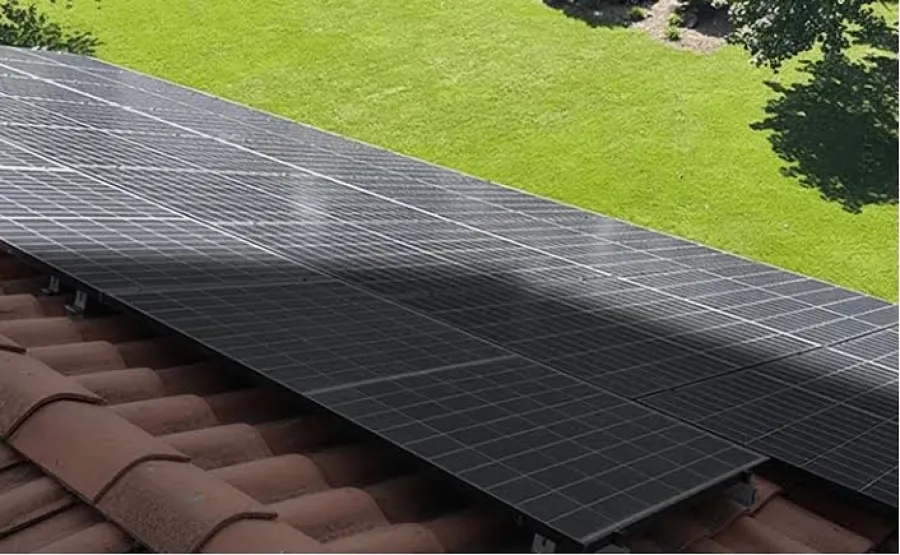
A chimney shadow that touches one panel at 4 p.m. does not look dramatic from the driveway. On a solar array, though, small shadows can create surprisingly uneven output. That is why the microinverter-versus-string-inverter decision gets real fast on roofs with dormers, trees, vents, or panels facing more than one direction.
Why shade is different from "less sun"
A string inverter connects a group of panels into a series circuit and converts their combined DC power into AC power in one central unit. A microinverter sits at or near the panel and converts power panel by panel. That difference matters when one module is shaded, dirty, aging differently, or pointed at a slightly different angle.
According to NREL, mismatch losses occur when modules in the same circuit operate at different current or voltage conditions. In plain English, one weak panel can limit what the string can deliver. Bypass diodes and modern inverter tracking help, but shade is still a design problem, not just an inconvenience.
This is the scenario where a panel-level microinverter option can be a natural fit. The article does not need to claim that microinverters always win. They do not. But on a roof where every panel lives a different day, panel-level conversion can make the system easier to design, monitor, and expand later.
When a string inverter is still the sensible choice
String inverters are not outdated. On a simple, unshaded south-facing roof, a string inverter can be efficient, tidy, and cost-effective. Fewer rooftop electronics may appeal to homeowners who prefer more equipment at ground level. Installers also tend to know these systems well, and troubleshooting is straightforward when the array layout is simple.
The decision gets more complicated when the roof has:
- Multiple roof planes with different sunlight windows
- Late-afternoon tree shade
- A small array that may be expanded later
- Panels that are hard to inspect visually
- Homeowners who want panel-level production data
That last point is not just a gadget feature. Panel-level monitoring can help spot a failing module, a loose connection, or a panel that is getting shaded more than expected as nearby trees grow.
The better question: how uneven is the roof?
The most useful way to compare microinverters and string inverters is not to ask which technology is better. It is to ask whether the roof behaves like one big solar surface or several smaller ones.
If the panels all face the same direction and stay clear most of the day, a string inverter may be enough. If the roof behaves like a patchwork, the flexibility of the SigenMicro Inverter becomes easier to justify because each panel can contribute on its own terms.
There is also a maintenance angle. A central inverter is usually easier to access, but a panel-level issue can be easier to identify with microinverter monitoring. Neither setup eliminates service calls. The difference is where the complexity sits and how visible problems are when they occur.
For homeowners comparing bids, the practical move is simple: ask each installer to model the same roof with the same shade assumptions and show expected annual production, not just equipment price. A system designed around the actual roof will usually beat one designed around a favorite inverter type.
For shaded or multi-plane roofs, it is worth reviewing Sigenergy's panel-level microinverter option before treating a basic string layout as the default.